
A sanctuary for primates
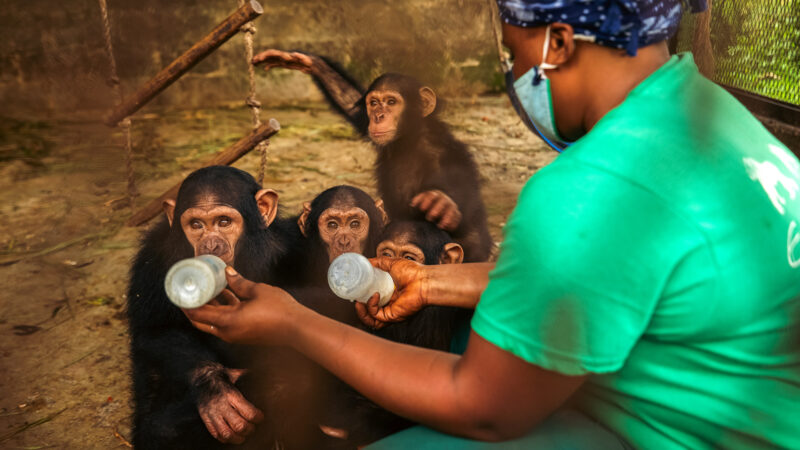
This is our historic program. Indeed, for about twenty years, the Lékédi Park, and now the Foundation, have been involved in the protection of great apes.
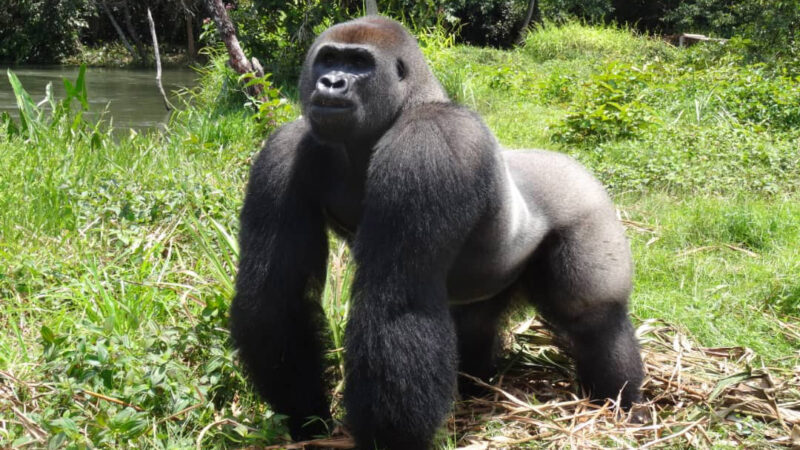
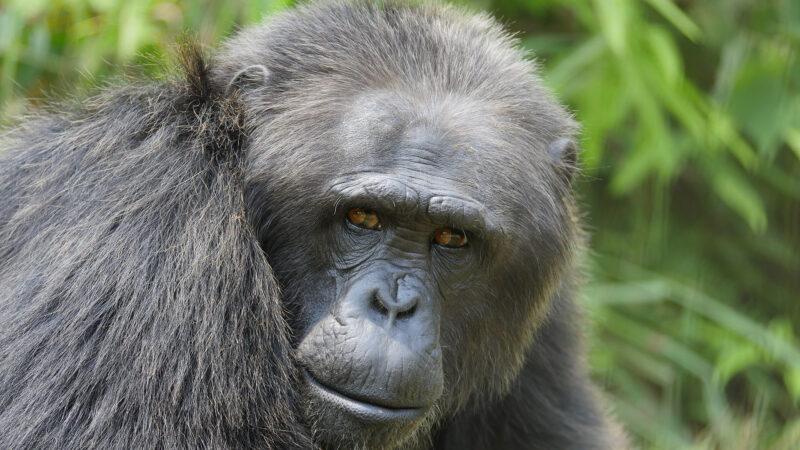
With the agreement of the Ministry of Water and Forests, the Park hosts orphaned gorillas and chimpanzees rescued from the bushmeat trade. Our goal is to rehabilitate them, but also to raise awareness among visitors about the protection of these endangered species. About ten gorillas have been reintroduced into the Batéké Plateau National Park since the beginning of the program, and three young gorillas are currently undergoing rehabilitation for an upcoming reintroduction.
Whenever possible, the rescued orphans will be placed in natural habitat reintroduction programs. To this end, the Foundation works closely with The Aspinall Foundation, which manages the Gorilla Protection Program (PPG).
Since 2017, the Lékédi Park has been an accredited member of PASA (Pan African Sanctuary Alliance), which brings together most of the primate sanctuaries in Africa. The accreditation was renewed in 2023.
Wildlife Monitoring
Each year, the Foundation conducts wildlife inventories to monitor the evolution of animal populations present in the park and its surrounding areas. These monitoring efforts are based on a protocol of camera traps deployed over several years: around thirty cameras are installed in the field to observe the use of different habitats according to the seasons and over time.
In addition, the teams carry out transect surveys, record signs of presence (footprints, feces, traces of passage), and conduct nocturnal inventories.
These cross-referenced observations help to better understand the spatial distribution of species and analyze the evolution of their presence over time.
A PASA (Pan African Sanctuary Alliance) accreditation
 Since 2017, our sanctuary has been accredited by PASA (Pan African Sanctuary Alliance), the largest network of sanctuaries and primate rehabilitation centers in Africa. This international recognition attests to the adherence to high standards in animal welfare, responsible management, and contribution to conservation.
By joining this network, our sanctuary benefits from essential support:
- Expertise and training: PASA brings together specialists who share their knowledge in veterinary care, rehabilitation, and primate enrichment.
- Quality and ethics: Accreditation ensures the application of rigorous protocols for animal welfare and ethical management.
- International visibility: Thanks to PASA, our sanctuary gains recognition and participates in global awareness campaigns against trafficking and habitat destruction.
- Support and partnerships: The network facilitates access to funding, strengthens cooperation with other sanctuaries, and creates connections with research institutions and NGOs.
Being a member of PASA means joining a community committed to the conservation of primates and the protection of biodiversity in Africa, working hand in hand with other stakeholders on the continent.