Created in 2021 by the Eramet group and its subsidiary Eramet Comilog, the Lékédi Biodiversity Foundation, based in Bakoumba, Gabon, is an accredited member of the Pan African Sanctuary Alliance (PASA). Its objective is to contribute to promoting biodiversity conservation, particularly in Gabon and Central Africa, through the preservation of ecosystems and endangered species.
Our missions to preserve biodiversity
The Lékédi Biodiversity Foundation focuses on three main areas of action:
- Supporting research and innovation with scientific partners
- Developing conservation and protection programs for species and their habitats
- Raising awareness and training various audiences on biodiversity preservation and sustainable development
Our 3 structuring areas of work
The activities of the Foundation are organized around several major strategic axes:
 1. Support research and innovation
Within the Parc de la Lékédi, the Foundation hosts a state-of-the-art scientific station where researchers from around the world collaborate on projects related to tropical ecology, primatology, botany, and landscape dynamics. These studies rely on long-term environmental monitoring systems, enriching data on Gabonese ecosystems and providing a better understanding of their evolution in the face of global changes.
Our key projects:
- Studies on savannas, to enhance knowledge about their composition, dynamics, and their links with forests
- Combating Invasive Alien Species (IAS), through the Foundation’s work and open innovation
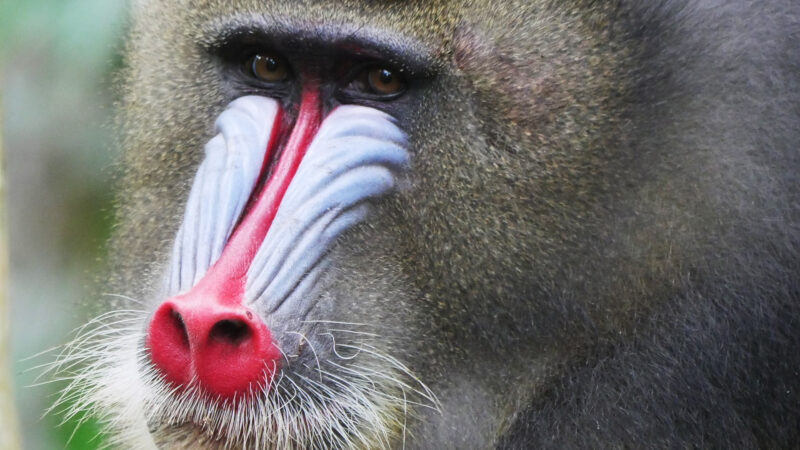
- The Mandrillus Project, conducted by CNRS, IRD, and CIRMF, studies the socio-ecology of a group of 400 mandrills living in complete freedom inside and outside the Park
- Work carried out with national and international scientists from the University of Franceville, the Interdisciplinary Center for Medical Research of Franceville, the University of Sussex, the University of Cairo, the Pan African Sanctuary Alliance (PASA), and the International Otter Survival Fund (IOSF)
- A scientific station capable of hosting researchers
- Publications
- A contribution to international databases
 2. Conservation of species and habitats
The Foundation conducts several wildlife protection programs. These efforts help to strengthen natural populations, preserve ecological corridors, and limit human pressures on sensitive environments.
Our key actions:
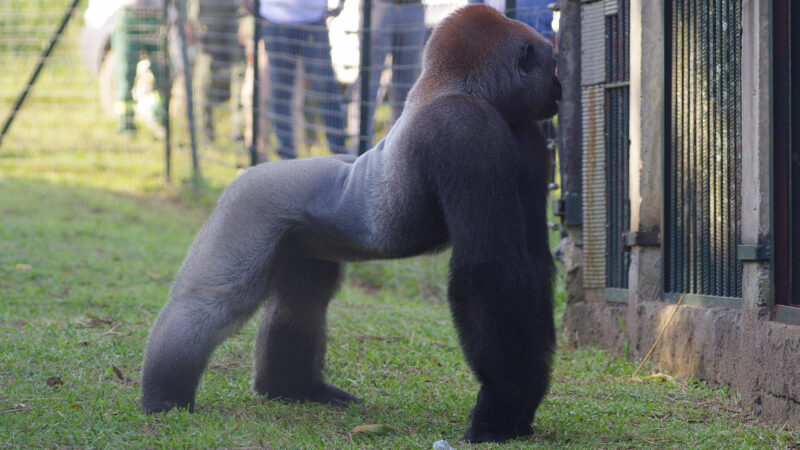
- Welcoming primates who are victims of poaching, orphaned, or illegally detained.
- Reintroducing extinct or threatened species into their natural habitats, such as gorillas and African wild dogs.
- Monitoring local wildlife using camera traps.
 3. Sharing & Education
The transmission of knowledge and raising awareness are fundamental pillars of our action. Through educational programs, training, and local initiatives, the Foundation promotes a better understanding of environmental issues among communities, schools, and visitors. It thus encourages the emergence of a new generation of actors committed to biodiversity.
Our key actions:
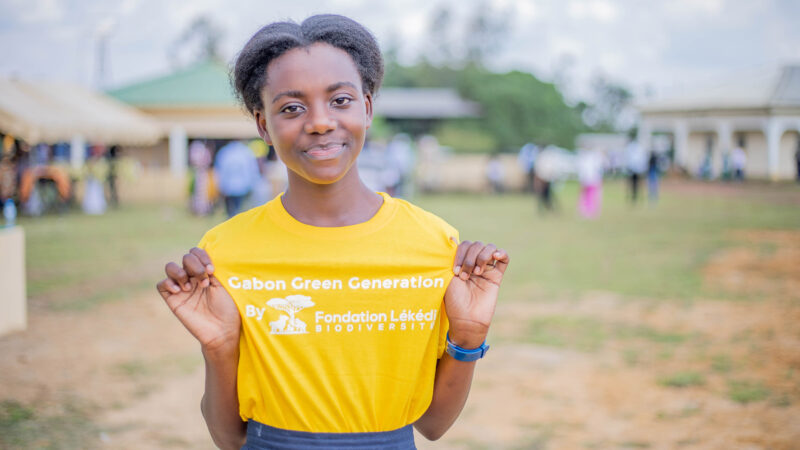
- The “Gabon Green Generation” program, in partnership with WWF and supported by the National Institute of Gabon, offers 2 hours of environmental education classes per week for 1 year to nearly 1,200 young Gabonese.
- The Biodiversity Day brings together experts and scientists every year for a moment of exchange on biodiversity.
- Awareness-raising among local communities:
- About biodiversity and endangered species, with the support of the Water and Forests department and the NGO Conservation Justice.
- About citizen science with the City Nature Challenge and the Grand Bioblitz du Sud (GBS).
Unique assets
To successfully carry out its missions, the Lekedi Biodiversity Foundation relies on its numerous strengths.
The Foundation benefits from recognized expertise in ecology and primatology and is supported by an exceptional environment as well as remarkable human and technical resources.
Located in the heart of a 14,000-hectare park, it has modern field infrastructures, including laboratories, wildlife monitoring systems, and facilities adapted to scientific research.
The team, composed of around fifty collaborators — most of whom are from the Bakoumba region—embodies the strength of the project: a solid local foundation combined with an international outlook.
With an operational budget of approximately one million euros per year, the Foundation relies on a rigorous and transparent governance model, ensuring the sustainability of its programs.